
Fly tying thread may seem simple, but it plays a critical role in a fly’s strength, durability, and overall finish. The three most common fly dressing threads are nylon, polyester, and gel-spun polyethylene (GSP). Each has specific advantages depending on the fly size, pattern type, and materials used.
Understanding these differences helps you choose the right thread for the job and avoid unnecessary bulk or thread breakages at the vise.
Traditional Silk Fly Tying Thread
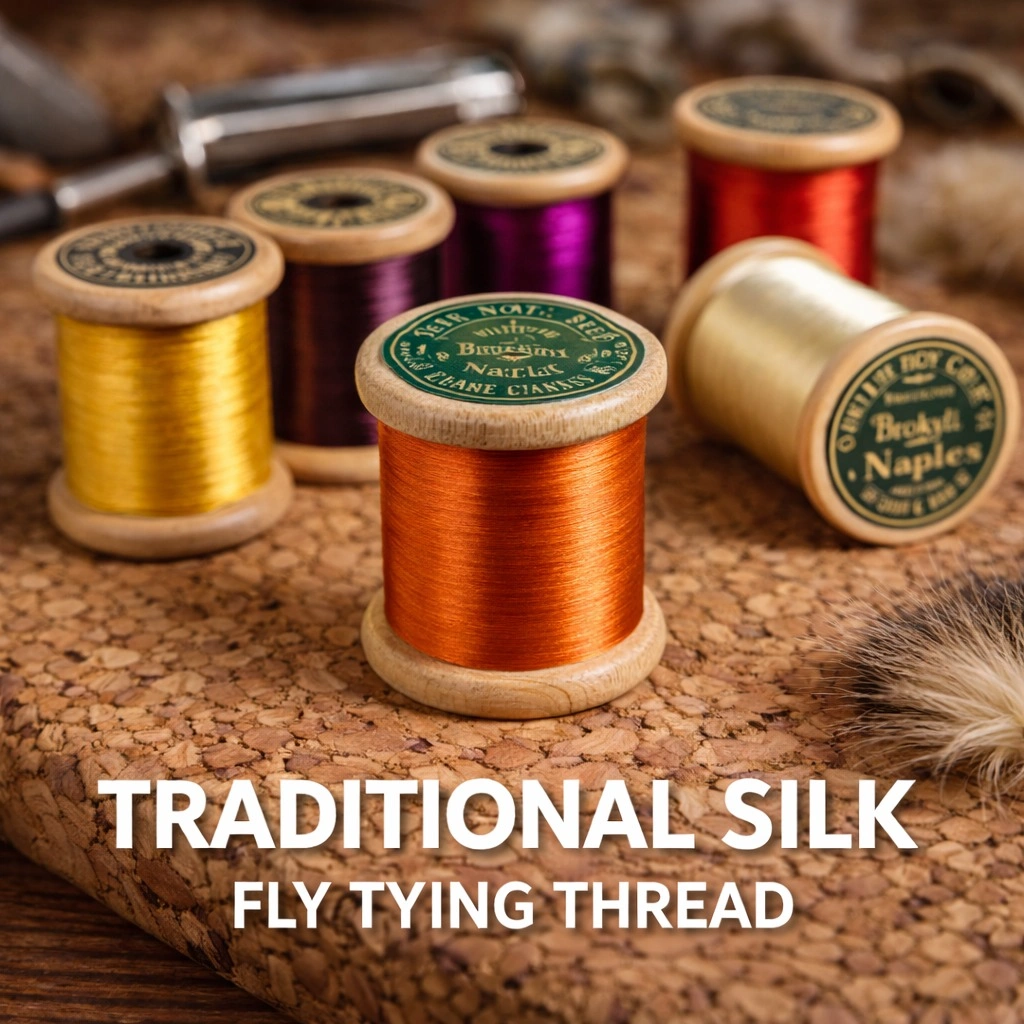
Before modern nylon, polyester, and GSP threads, fly tiers relied almost exclusively on natural silk thread. Silk was the original fly tying thread and remains closely associated with classic and traditional fly patterns.
Silk thread is naturally strong for its diameter and has a slightly rough texture, which helps materials grip and stay in place. When waxed, silk becomes even more durable and manageable at the vise. One of its most distinctive characteristics is how it darkens when wet or varnished, giving classic flies their rich, translucent finish.
While silk is not as strong as modern synthetic threads, it offers unmatched authenticity and aesthetic appeal. For tiers who value tradition, history, and the look of classic flies, silk thread remains an important and respected material.
Nylon Thread
Nylon is one of the most versatile and affordable fly tying threads. It has a slight stretch, making it forgiving and easy to control—especially useful for beginner tiers.
Best for:
Small to medium trout flies
Dry flies, nymphs, and general-purpose patterns
Fly tiers who want good control and smooth wraps
Why choose nylon?
It is easy to work with, cost-effective, and its slight stretch helps prevent thread breakage when applying tension.

Polyester Thread
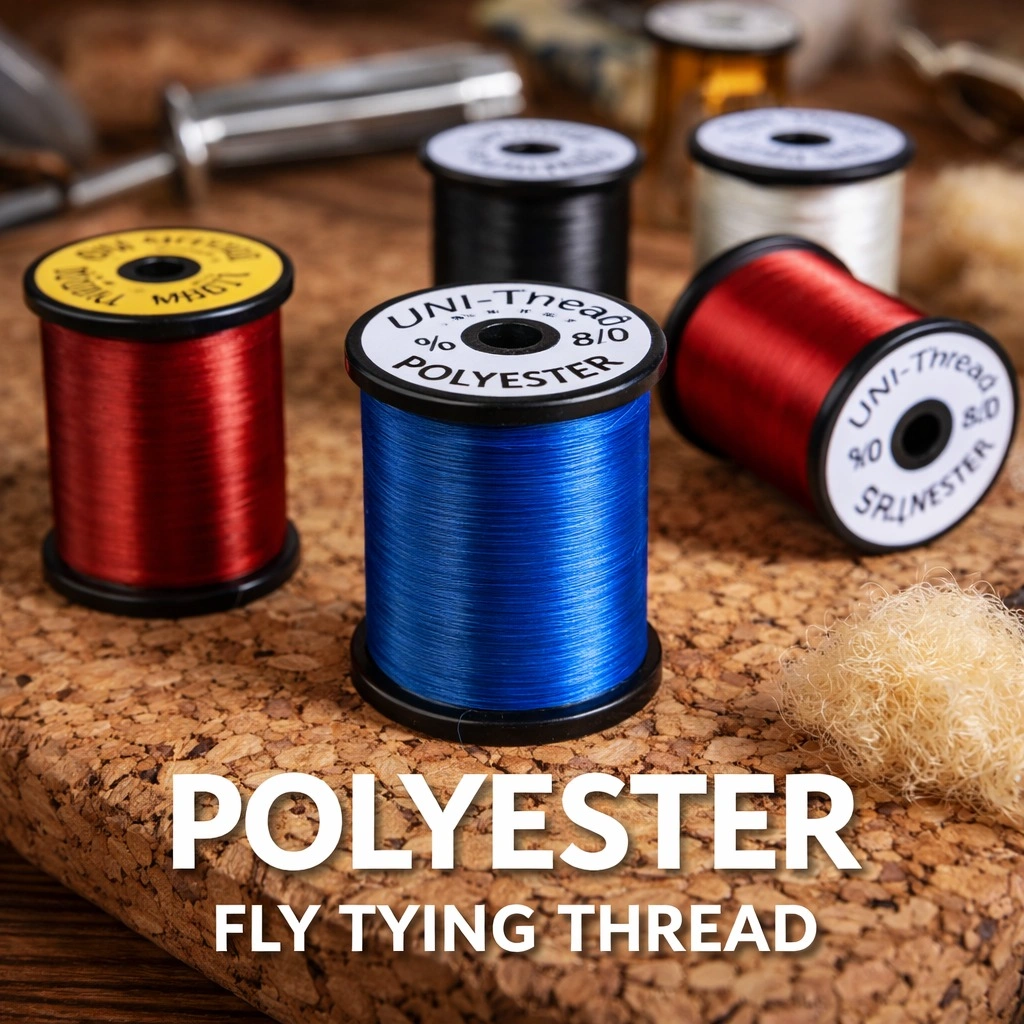
Polyester thread is stronger and more abrasion-resistant than nylon, with very little stretch. This makes it ideal for larger flies or when tying in tougher materials.
Best for:
Larger trout flies
Streamers, bass flies, and saltwater patterns
Why choose polyester?
It offers excellent durability and better tension control, making it well suited for flies that see heavy use.
Gel-Spun Polyethylene (GSP) Thread
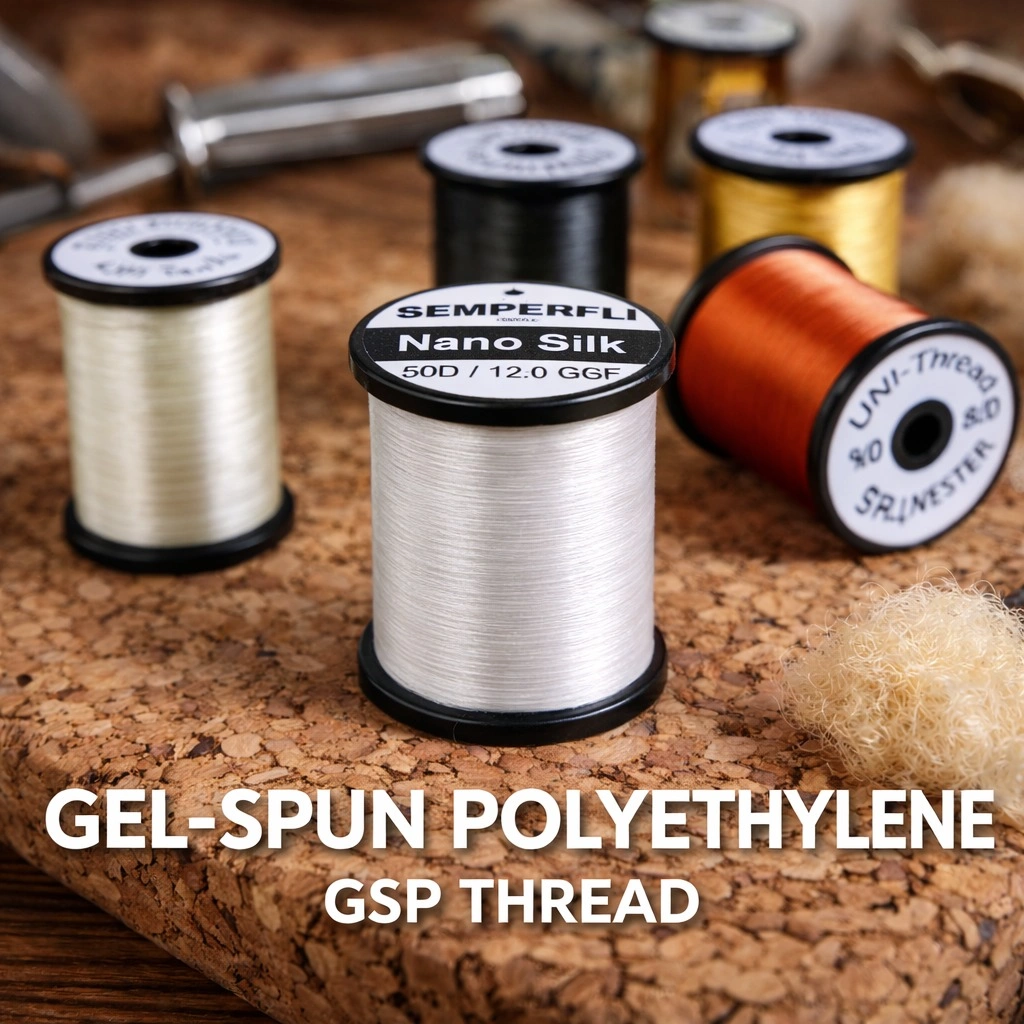
GSP is the strongest fly tying thread for its diameter. With virtually no stretch, it allows you to tie down bulky materials securely while keeping thread buildup to a minimum. Because of its strength, a lighter touch is recommended at the vise.
Best for:
Large streamers and predator flies
Deer hair spinning and stacking
Heavy-duty and high-tension applications
Why choose GSP?
Its exceptional strength-to-weight ratio makes it ideal for demanding fly patterns where maximum holding power is required.
Nano Silk (GSP-Based Thread)
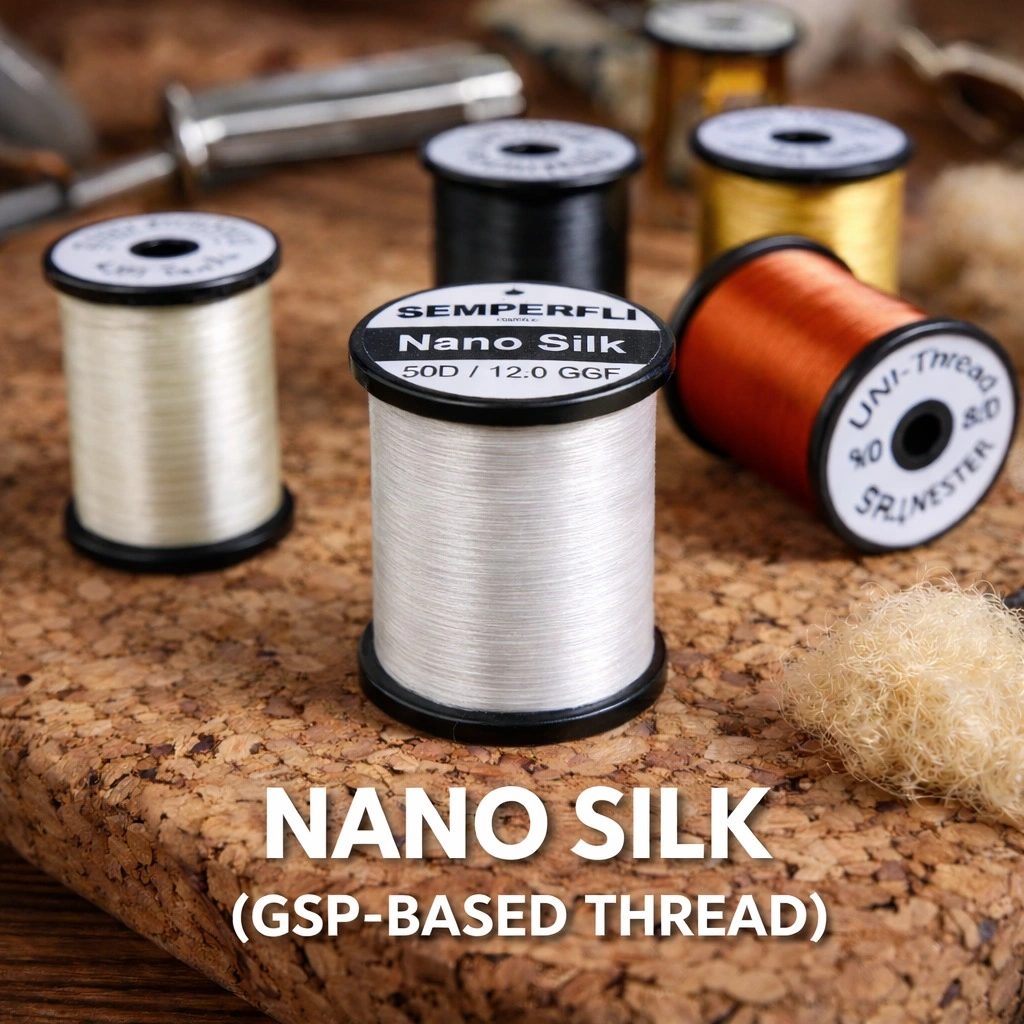
Nano Silk is a specialised fly tying thread made from gel-spun polyethylene (GSP). It is known for its extreme strength and its ability to lay flat, which helps reduce thread buildup—especially on smaller flies.
Common sizes and uses:
18/0 (30D): Micro flies
12/0 (50D): Midges, emergers, dry flies, Euro nymphs
6/0 (100D): Salmon flies, predator streamers, nymphs, dries, and deer hair spinning
Understanding Denier (Thread Thickness)
Denier refers to the thickness and strength of the thread. Choosing the correct denier helps keep flies neat, proportionate, and durable.
30–50 Denier: Micro flies, midges, emergers
70–100 Denier: Small dries, nymphs, salmon flies
140–210 Denier: Most standard trout flies
280–300 Denier: Large streamers and saltwater flies
400+ Denier: Big game flies and deer hair work
Tip: Use the thinnest thread that still provides enough strength to securely tie in your materials.
Popular Fly Tying Thread Brands
UNI-Thread (Waxed)
Wapsi Ultra Thread
Veevus Thread
Nano Silk
Frequently Asked Questions
What is the best fly tying thread for beginners?
Nylon thread is generally the best choice for beginners. Its slight stretch makes it forgiving and easier to control, reducing thread breakage while learning proper tension.
Can I use one thread size for all fly patterns?
While it is possible, it is not ideal. Using different denier sizes helps keep flies neat and proportional. Smaller flies benefit from finer threads, while larger flies require thicker, stronger thread.
Is GSP thread too strong for trout flies?
GSP can be used for trout flies, but care is needed. Because it has no stretch, it is easy to cut materials or even break hooks if too much tension is applied.
Why does my thread keep breaking at the vise?
Common causes include too much tension, sharp hook edges, or using a thread that is too fine for the materials being tied in. Switching to a stronger or slightly thicker thread often solves the problem.
Does thread colour matter?
Thread colour can influence the final look of a fly, especially on slim patterns or when using translucent materials. In many cases, the thread also helps create a smooth base for dubbing and bodies.
Quick Takeaway
Nylon: Best all-round choice for most trout flies
Polyester: Stronger and tougher, ideal for larger or saltwater patterns
GSP / Nano Silk: Ultra-strong with minimal bulk, perfect for streamers and deer hair work
Choosing the right fly tying thread makes tying easier, keeps flies cleaner, and improves durability. It’s a small detail that makes a big difference at the vise.
