
In fly dressing, I’ve learned that it’s not the color that convinces a fish, it’s the shape and proportion of the fly as it moves through light and water. A fish doesn’t see our creations in vivid detail; it sees a form, a rhythm, and a suggestion of life. That’s what makes a fly believable.
These images are meant to stimulate the dresser, a focus on balance, silhouette, and how the fly sits or drifts in its element. Color adds the final touch, but it’s the structure and motion that truly speak to the fish.
For me, the art of fly dressing isn’t about decoration, it’s about understanding the language of water and instinct, and creating something that feels alive within it.
The Stonefly Nymph is a rugged, realistic pattern built to imitate the large, heavily bodied stonefly larvae that dwell in fast, oxygen-rich rivers. Its weighted, segmented body and defined legs allow it to sink quickly and drift naturally along the riverbed where trout feed. Known for its durability and lifelike movement, this pattern is a proven performer throughout the year in both freestone and tailwater environments.
Common Materials:
Hook: 2XL–3XL nymph hook, sizes 6–12
Tail: Brown or black goose biots
Body: Dubbing or chenille in dark brown, golden, or olive
Rib: Fine wire for segmentation and strength
Thorax: Peacock or darker dubbing
Legs: Goose biots or soft hackle fibers
Wing Case: Shellback, latex, or mottled film
Weight: Lead or tungsten wire underbody
Thread: Black or brown


The Zonker is a versatile streamer pattern admired for its lifelike motion and bold profile. Designed to imitate small baitfish, it’s effective in both stillwaters and fast-flowing rivers. The fly’s signature rabbit strip wing creates a natural, pulsating movement that fish find irresistible. With its combination of soft texture, flash, and durability, the Zonker is a reliable pattern for trout, salmon, and a wide range of predatory species.
Common Materials:
Hook: Streamer hook, sizes 2–8
Tail/Wing: Rabbit Zonker strip (Different colors)
Body: Flat Mylar or tinsel
Rib: Fine wire for reinforcement
Collar (optional): Soft hackle or marabou
Head: Thread, finished with varnish or resin
Thread: To match body color
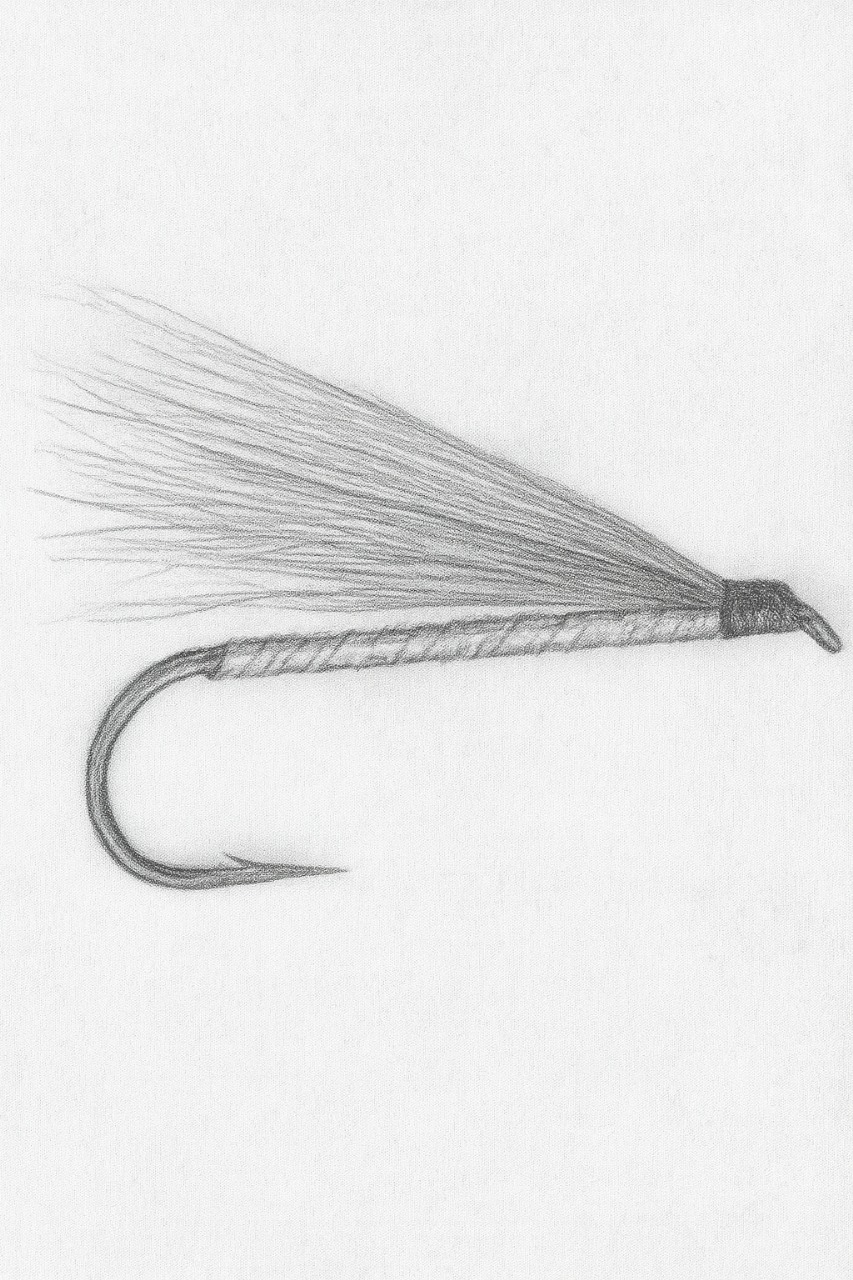
The Mickey Finn is a classic and enduring streamer pattern, famed for its bright contrast and consistent effectiveness across species and waters. Designed to imitate small baitfish, its yellow and red bucktail wings create a vivid flash that provokes aggressive strikes. Simple yet eye-catching, this fly remains a proven choice for trout, salmon, and other predatory fish the world over.
Common Materials:
Hook: Streamer hook, sizes 4–10
Tail (optional): Short red and yellow bucktail
Body: Flat silver tinsel or Mylar
Rib: Fine silver wire (optional for durability)
Wing: Yellow and red bucktail layered evenly
Head: Black thread, finished with varnish
Thread: Black
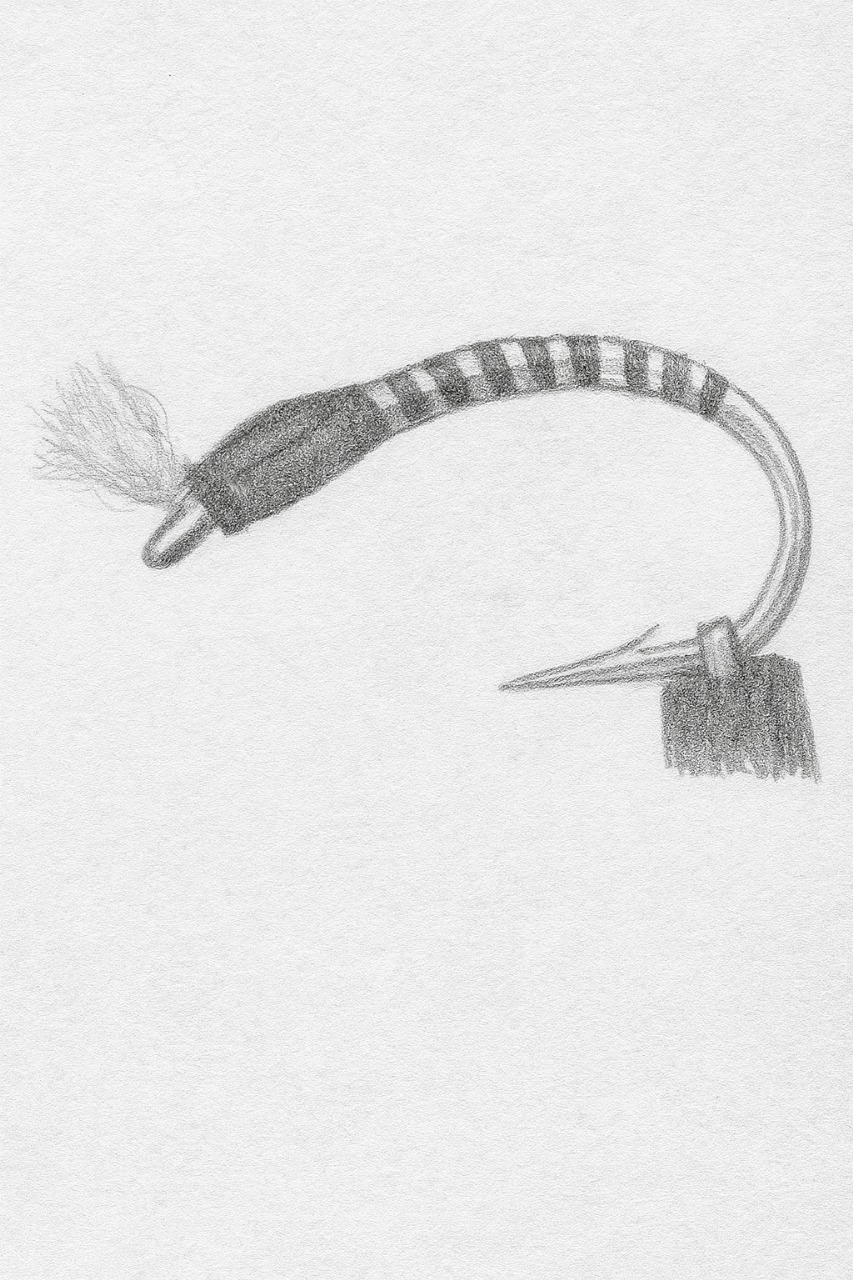
The Buzzer, also known as a Chironomid Pupa, is a minimalist yet deadly imitation of midge pupae ascending through the water column. Its slim, segmented profile and subtle sheen perfectly match the natural insect. Designed to suspend mid-depth or just below the surface, the Buzzer is most effective in stillwaters and gentle currents. Its clean form and delicate balance make it a staple for anglers targeting trout feeding on emergent midges.
Common Materials:
Hook: Curved buzzer or pupa hook, sizes 10–16
Body: Fine thread, floss, or stripped quill in black, red, or olive
Rib: Fine wire (silver, copper, or gold)
Thorax: Peacock herl or darker dubbing
Cheeks (optional): Flexi-floss or tinsel for flash
Breathers: White Antron or CDC tufts
Thread: To match body color
The CDC Mayfly is a refined dry fly pattern that captures the soft realism of the adult or emerging mayfly. Its natural buoyancy and subtle motion come from CDC (Cul de Canard) feathers, which shimmer and breathe with life on the surface. The slim body and fine tail fibers give the fly a graceful silhouette that sits delicately in the surface film, presenting a quiet, convincing profile to even the most selective trout.
Common Materials:
Hook: Standard dry fly, sizes 14–18
Tail: Fine cock hackle fibers or microfibetts
Body: Fine dubbing or thread in natural, olive, or gray tones
Rib: Optional fine wire for segmentation
Wings: CDC (Cul de Canard) feathers, upright or spent style
Hackle: Sparse cock hackle, color to match body
Thread: Olive, gray, or brown
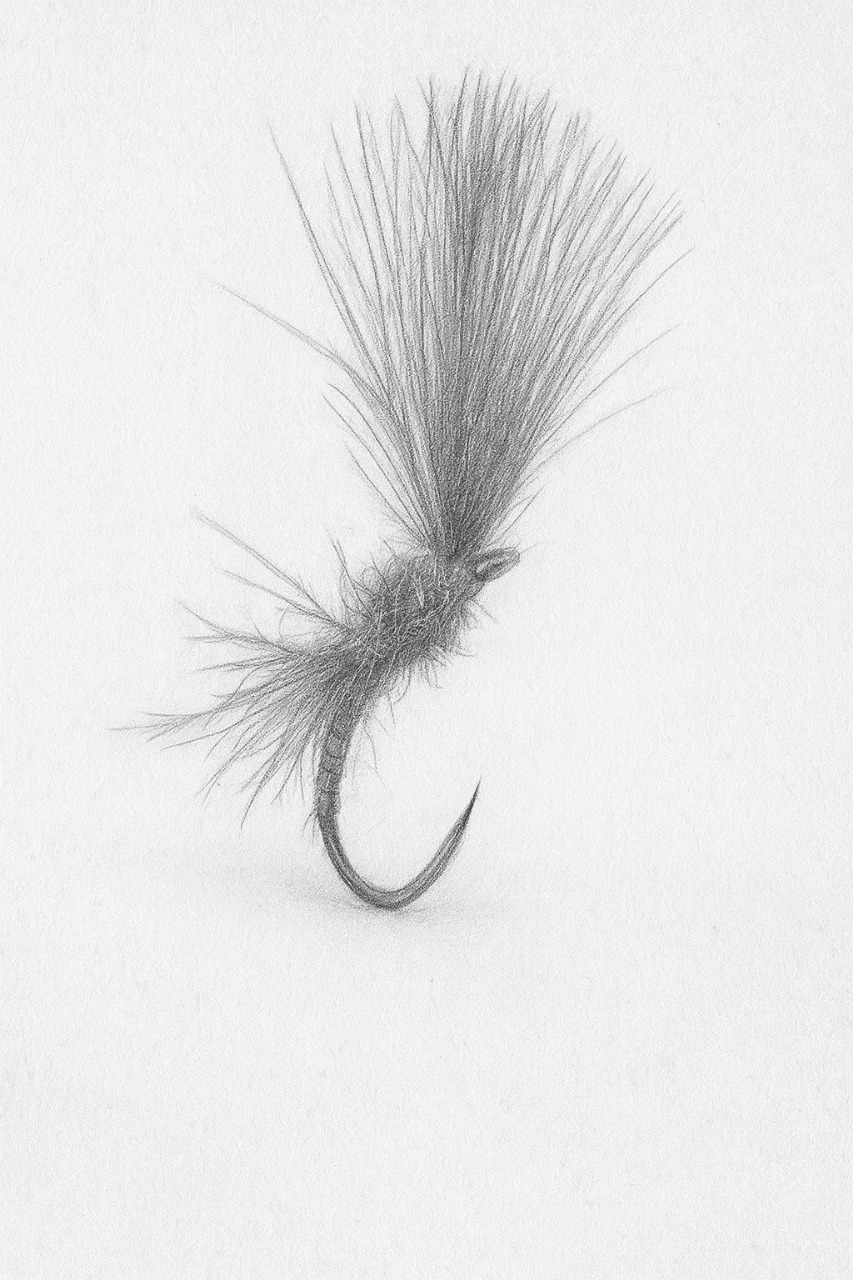
The CDC Klinkhåmer is a refined modern version of Hans van Klinken’s classic emerger pattern. It’s designed to imitate an insect breaking through the surface film, balanced perfectly between water and air. The CDC post adds subtle movement and exceptional buoyancy, while the parachute hackle ensures a natural footprint. With its slim dubbed body and curved hook, the fly sits with the abdomen below the surface and the thorax above, precisely where trout expect to find an emerging insect.
Common Materials:
Hook: Curved emerger or Klinkhåmer hook, sizes 12–18
Tail: Sparse fibers or shuck (optional)
Body: Fine dubbing in olive, tan, or gray
Rib: Fine wire or thread for segmentation
Hackle: Brown or grizzly parachute hackle
Post/Wing: CDC (Cul de Canard) fibers or poly yarn
Thorax: Darker dubbing for contrast
Thread: Olive, brown, or gray
The CDC Emerger represents an insect in the most vulnerable stage of its life, emerging through the surface film to become an adult. This moment of transition is one that trout instinctively target. The fly’s design allows the abdomen to hang below the surface while the CDC thorax and wing rest delicately on top, capturing that precise posture of life in transition. Its subtle silhouette and balance make it an exceptionally effective imitation of emerging mayflies, caddis, and midges.
Common Materials:
Hook: Curved emerger hook, sizes 14–18
Tail (optional): Sparse fibers or shuck material
Body: Fine dubbing or thread in natural tones
Rib: Fine wire or thread for segmentation
Thorax/Wing: CDC (Cul de Canard) fibers
Thread: Brown, olive, or gray
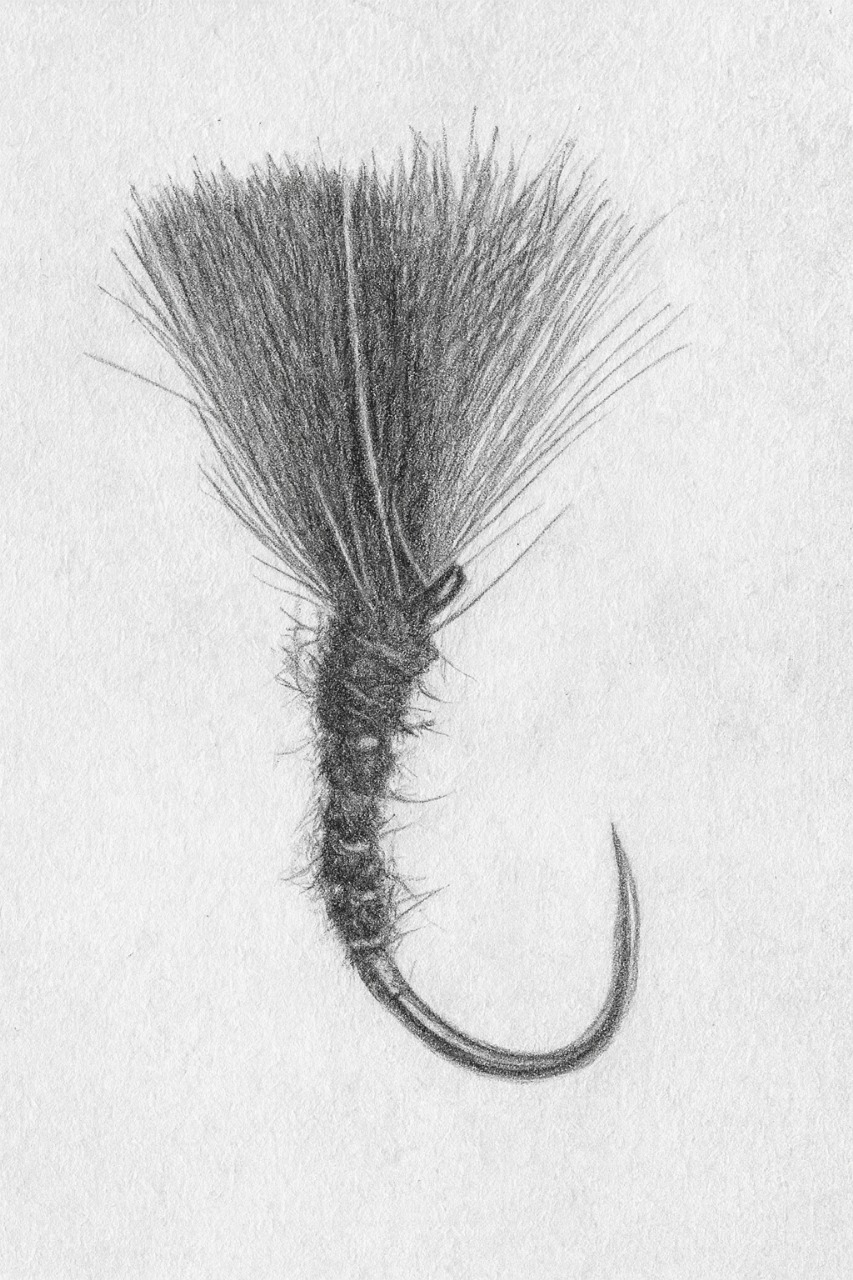
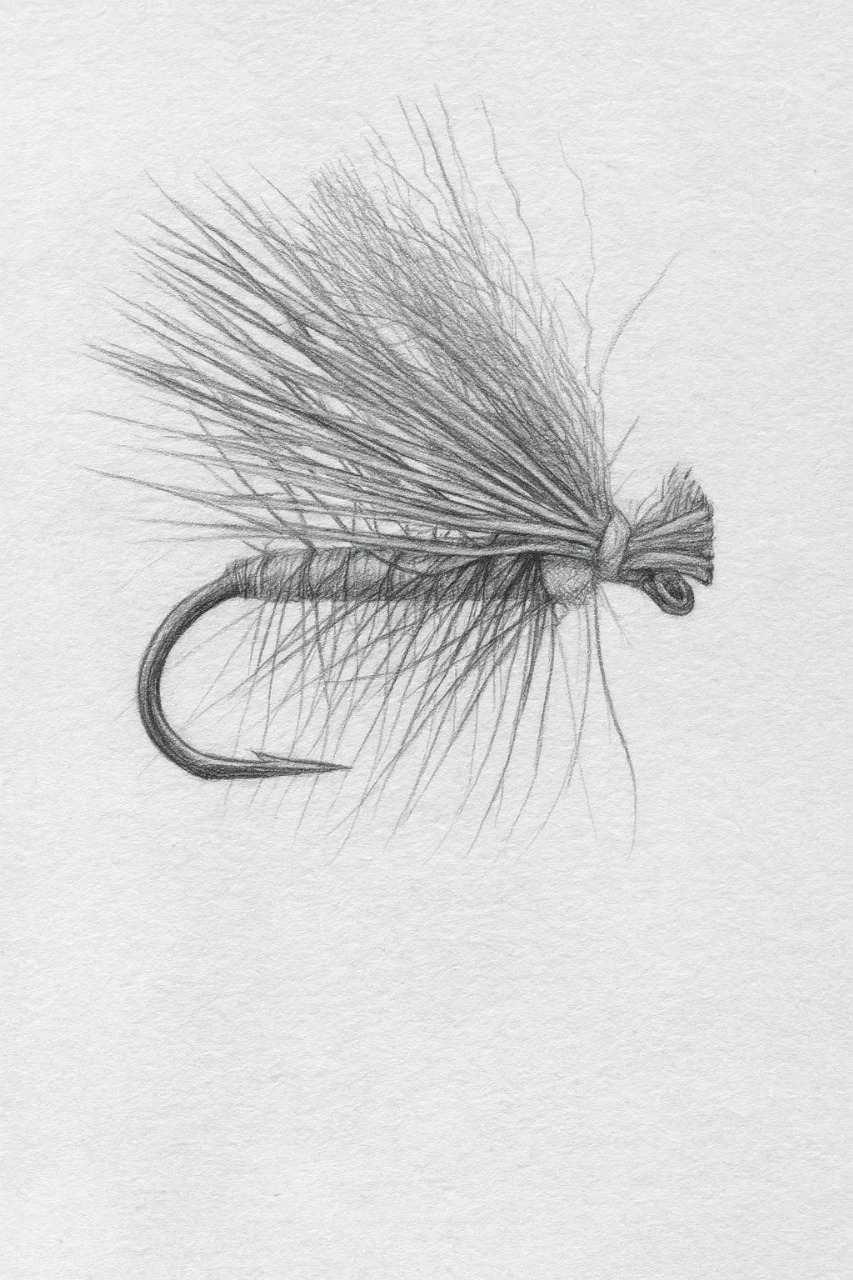
The Deer Hair Caddis is a timeless dry fly that imitates the fluttering adult caddisfly as it skitters and dances on the water’s surface. Its buoyant deer hair wing and hackled body create a lifelike profile and superb floatation, even in turbulent current. This reliable pattern is effective throughout the caddis hatch and remains an essential in every trout angler’s collection.
Common Materials:
Hook: Standard dry fly, sizes 12–18
Tail: Optional—short tuft of fine dubbing or hackle fibers
Body: Fine dubbing in tan, olive, or brown
Hackle: Brown or ginger cock hackle
Wing: Natural deer hair
Thread: Tan or brown
This pattern imitates the spent or spinner stage of the mayfly, the delicate, final phase of its life cycle when the insect lies motionless on the surface. Its slim, segmented body and fine tail fibers create a natural, low-riding silhouette that perfectly matches the mayfly’s posture. The CDC wings add subtle shimmer and buoyancy, while fine dubbing gives the body a lifelike translucence, making it deadly on calm water and during evening rises.
Common Materials:
Hook: Standard dry fly, sizes 14–18
Tail: Microfibetts or fine hackle fibers
Body: Fine thread or dubbing in natural or olive tones
Rib: Fine wire or thread for segmentation
Wings: CDC (Cul de Canard) feathers, spent style
Thorax: Light dubbing or CDC fibers
Thread: Brown or rust
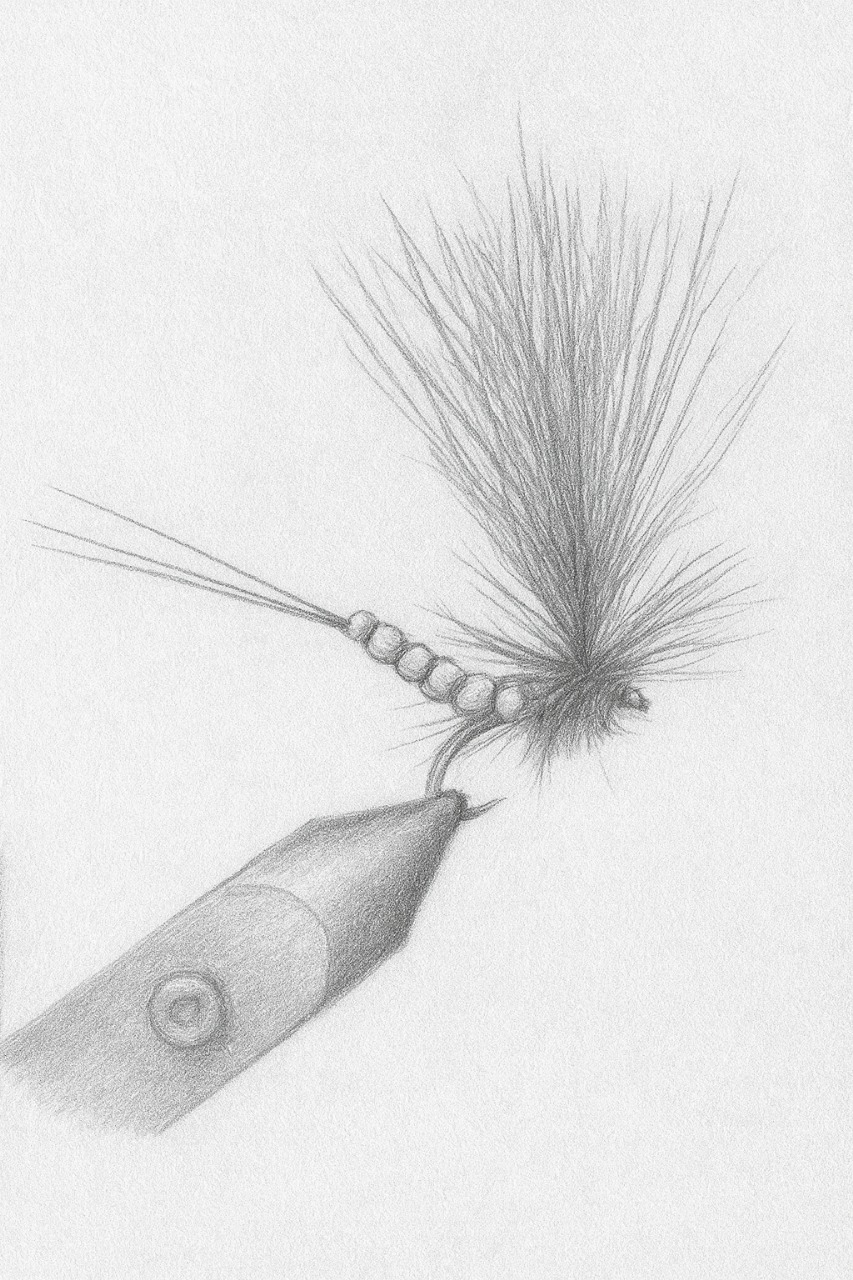
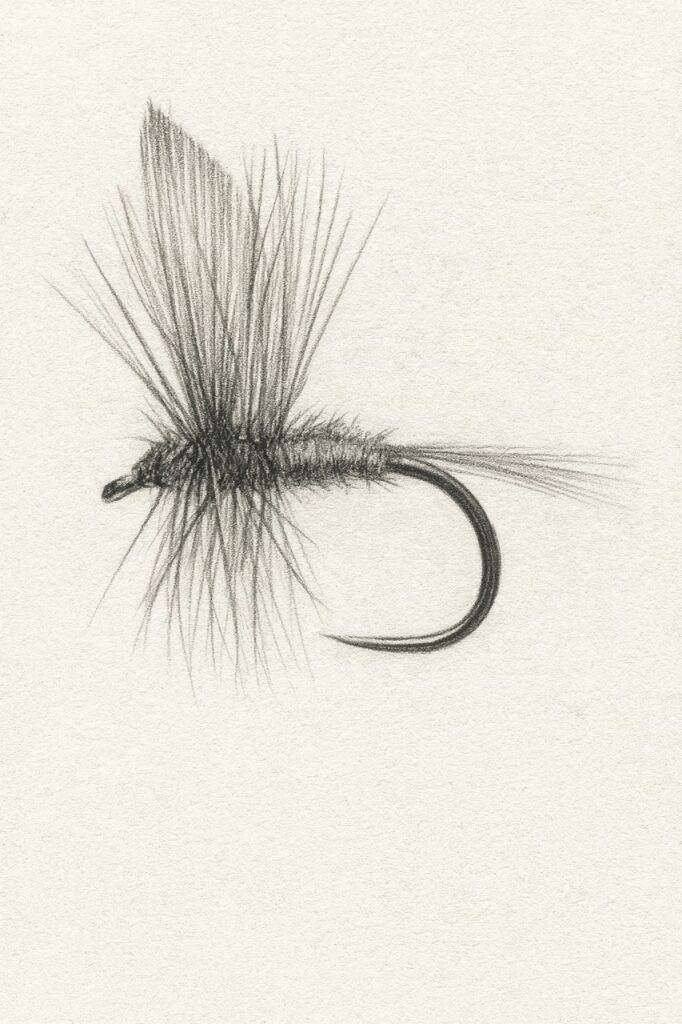
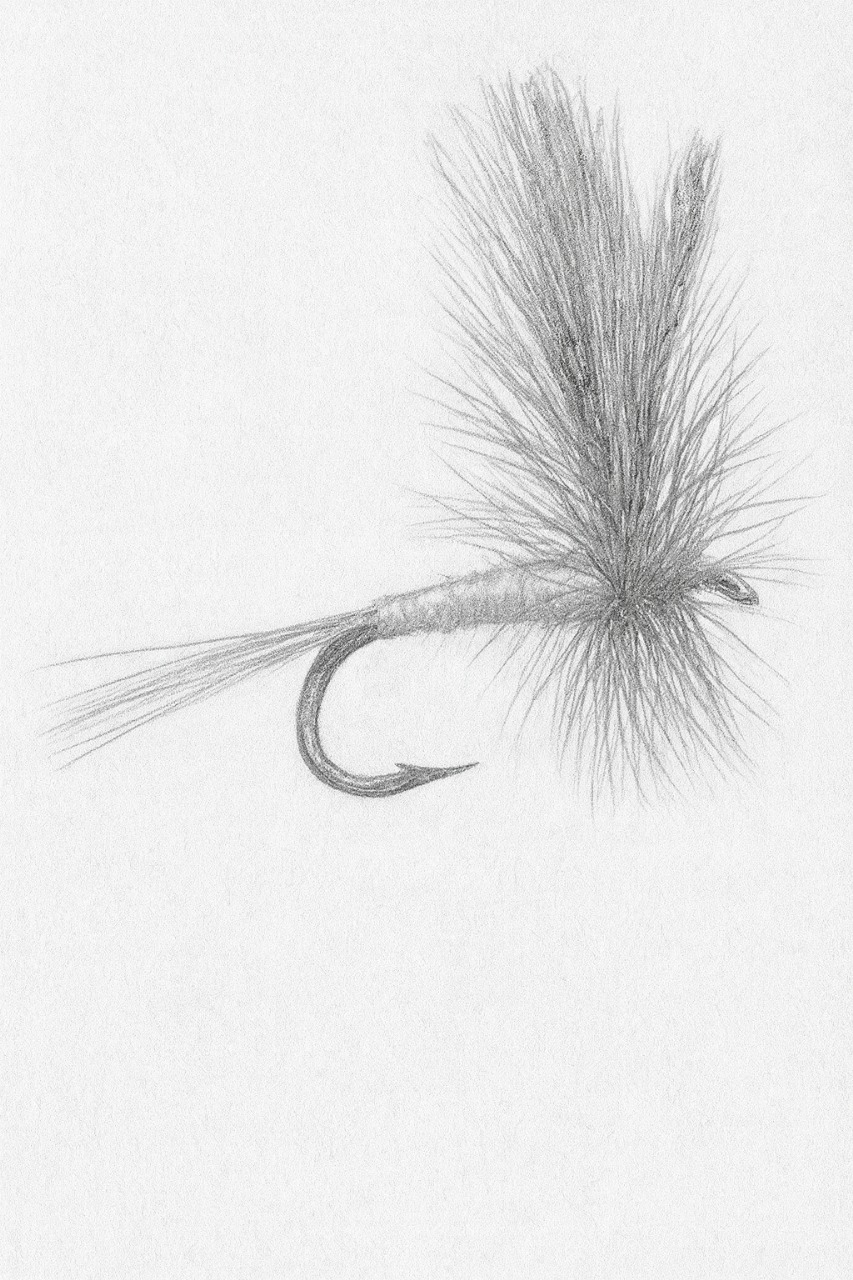
This pattern imitates a dun-stage mayfly, the freshly emerged adult resting on the water’s surface before taking flight. The upright split wings, fine tail fibers, and hackled body create the perfect mayfly silhouette that floats naturally and triggers confident rises from trout.
Common Materials:
Hook: Standard dry fly, sizes 12–18
Tail: Cock hackle fibers (medium dun or brown)
Body: Fine dubbing in gray or olive tones
Hackle: Grizzly and brown mixed
Wings: Upright cock hackle tips or CDC (light dun)
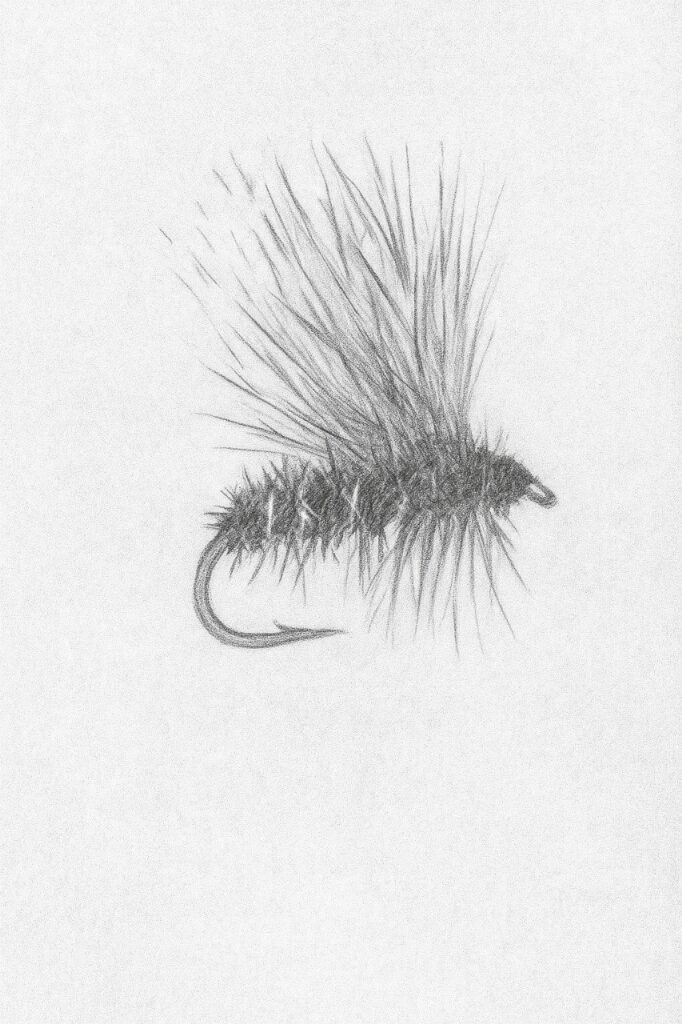
This fly imitates an emerging or adult caddisfly, one of the most active and abundant insects in trout streams. The dense hackle and angled deer or elk hair wing allow it to sit high on the surface or just below the film, ideal for imitating a struggling caddis about to take flight.
Typical Materials:
Hook: Standard or curved dry fly hook (sizes 12–18)
Body: Peacock herl or dubbed fur (olive, tan, or brown)
Hackle: Brown or ginger cock hackle
Wing: Deer or elk hair
Head: Thread
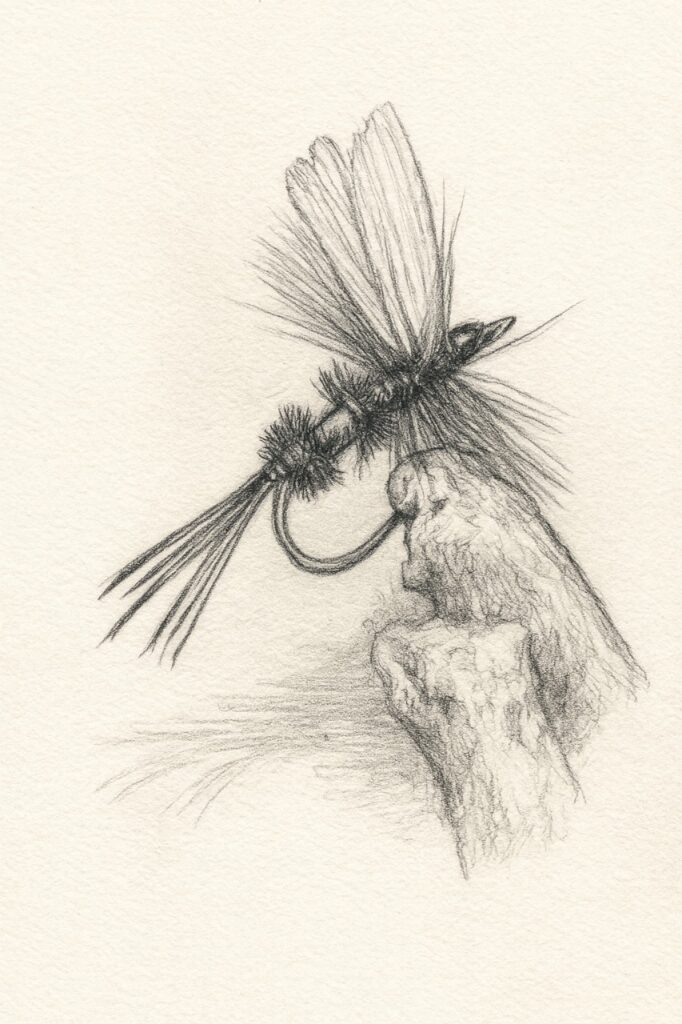
The Royal Coachman is a classic attractor dry fly, instantly recognizable by its distinctive peacock herl body, red floss band, and white wings. Its vibrant colors and buoyant design make it an irresistible target for trout in both rivers and stillwaters. First tied in the 1800s, it remains a staple in traditional fly boxes today.
Typical Materials:
Hook: Standard dry fly, sizes 10–16
Tail: Golden pheasant tippets
Body: Peacock herl with red floss center
Wings: White duck or calf tail
Hackle: Brown
Thread: Black or red
Lorem ipsum dolor sit amet, consectetur adipiscing elit. Ut elit tellus, luctus nec ullamcorper mattis, pulvinar dapibus leo.
Lorem ipsum dolor sit amet, consectetur adipiscing elit. Ut elit tellus, luctus nec ullamcorper mattis, pulvinar dapibus leo.
